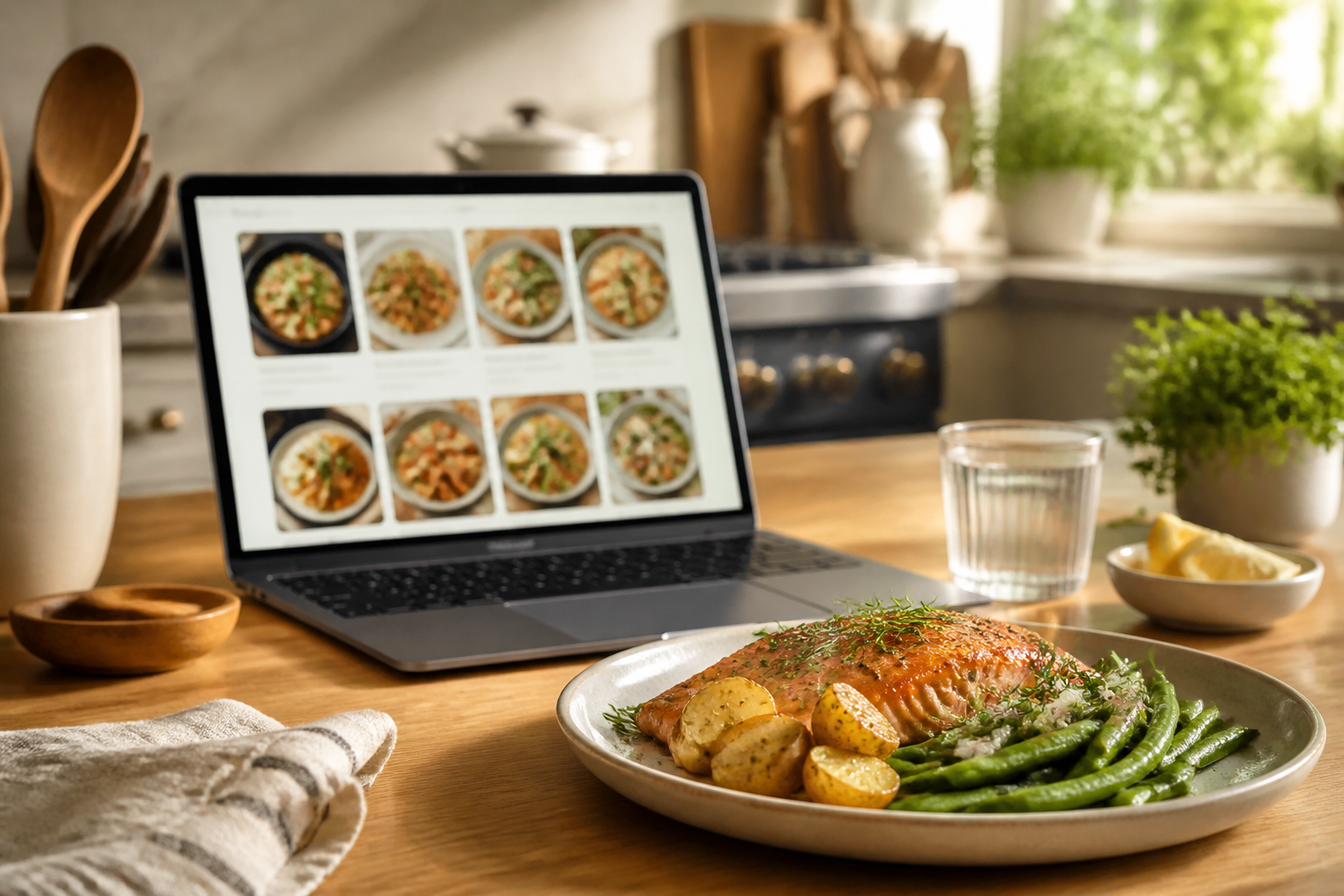
If you are still deciding whether to begin, start with how to start a food blog — niche, name, first recipe, and getting online. This guide is the next layer: how to structure the site so visitors can find and cook from your recipes as the collection grows.
A recipe website is less a magazine and more a cooking tool. The homepage can look warm, but the index, navigation, and recipe pages do the real work — not empty category trees you hoped to fill someday.
Food blog vs recipe website
People use the phrases interchangeably. In practice, the difference is structure:
- A food blog prioritises publishing — new recipes, stories, and a chronological feed
- A recipe website prioritises finding and cooking — clear indexes, stable URLs, collections, and pages that work as instructions
Most good food blogs become recipe websites over time. Plan for that early so you are not renaming everything after recipe number twenty.
The pages that matter
- Home / recipe index — the browse surface; newest or featured recipes up top
- Individual recipe pages — the product; see recipe page layout
- About — who cooks here and why anyone should trust the recipes
- Collections — weeknights, baking, holidays — add these when the index gets hard to scan, not on day one
You do not need a magazine empire to launch. A small, complete set of cookable recipes beats a skeleton with empty category pages.
Design the recipe index for hungry scanners
The index is where return visitors land when they remember “that chicken thing.” Make each card answer three questions fast: what is the dish, how long does it take, and does the photo match what they will cook?
- Use the same searchable title as the recipe page
- Show a finished-dish thumbnail, not a mood board
- Include prep or total time when you know it
- Keep the list readable on a phone with one thumb free
Keep URLs boring and stable
Prefer short, readable slugs: /recipes/lemon-garlic-chicken over dates, campaign codes, or cute nicknames. Once a recipe ranks or gets shared in a group chat, changing the URL is expensive. Write the dish name the way people search — more on that in how to write a recipe and food blog SEO: what actually matters.
Navigation should help cooks, not decorate
A header with Home, Recipes (or just the logo that returns home), and About is enough at the start. Add category links when you feel lost in your own index. Avoid mega-menus of empty sections you hope to fill someday.
Use the about page for trust, not biography essays
Say who is cooking, what kind of recipes live here, and what “tested” means on this site. Family recipe sites and beginner food blogs both benefit from a short, honest voice. Save the long memoir for later — or never.
Launch structure checklist
- Three to ten tested recipes with clear titles and steps
- A home index that lists all of them
- One about page with a real name and cooking point of view
- Mobile-readable recipe pages with print-friendly layout
- A shareable link you have actually opened on your phone
Want a concrete reference? Browse Savorible Kitchen and notice how browse → recipe → cook stays short.
Start your food blog
Start your very own food blog in 10 minutes.