A food blog recipe is not a diary entry with ingredients at the bottom. It is instructions a stranger can follow while the pan is hot. Write for the cook in someone else’s kitchen — distracted, hungry, and missing one spoon.
Still setting up the site? Start with how to start a food blog, then come back here when you are ready to publish the first dish. Site setup can wait; the recipe cannot.
Start with a searchable title
Name the dish the way people look it up. “Creamy Tomato Soup” beats “Rainy Day Hug in a Bowl.” Clever nicknames can live in the intro; the title should be cookable and findable. Vague titles help neither readers nor search — more in food blog SEO: what actually matters.
Write a short, useful lead-in
Two or three paragraphs is plenty for most recipes. Cover:
- What the dish is and when you make it
- What makes it work (technique, shortcut, flavour trick)
- Who it is for — weeknights, beginners, a crowd, meal prep
Skip the thousand-word life story before the ingredients. A long preamble rarely ranks you into relevance — it mostly delays the cook.
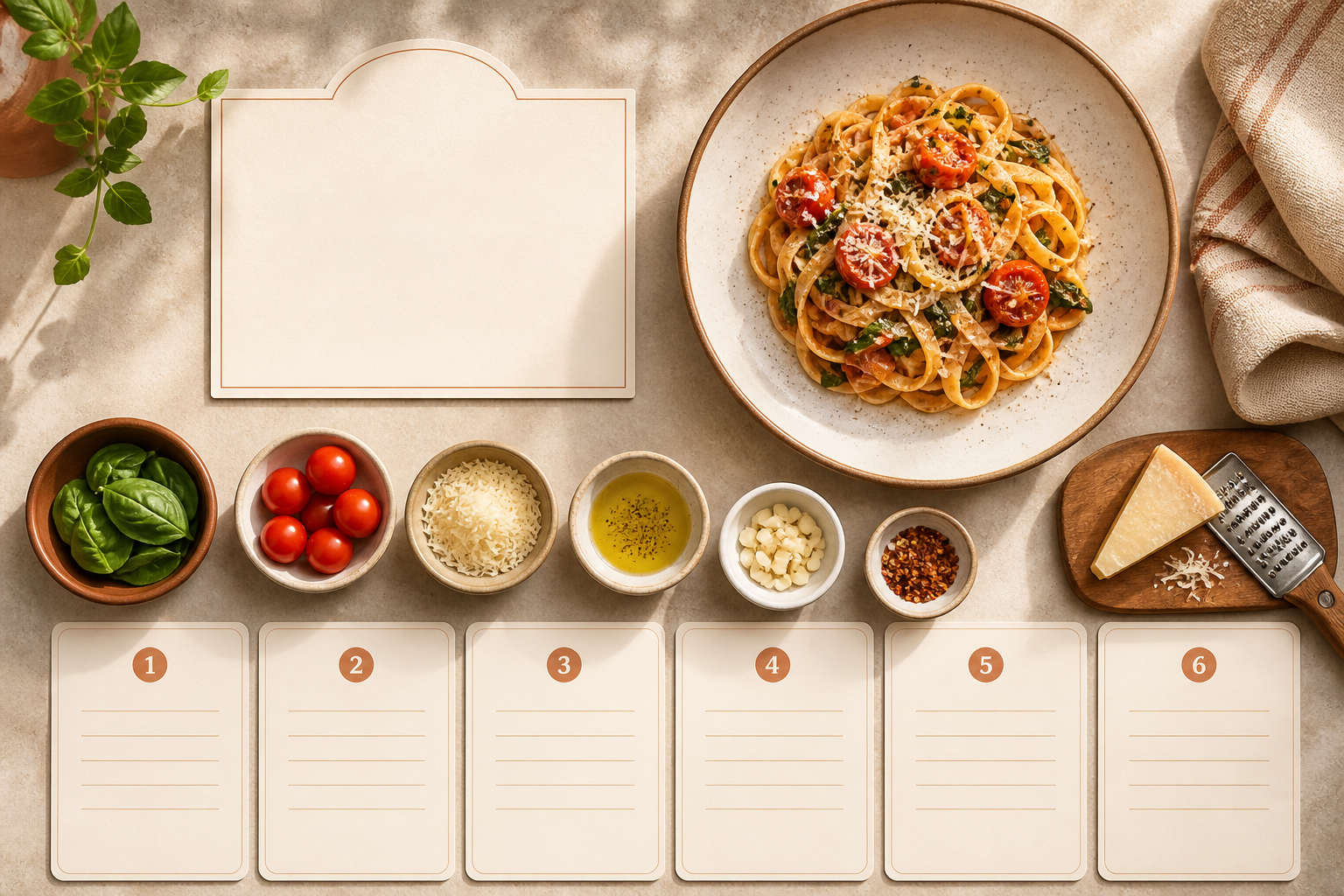
List ingredients in cook order
- Group them if the recipe has parts (dough, filling, glaze)
- Use clear amounts — weights help for baking
- Call out optional items
- Mention substitutions next to the ingredient when it matters
If a reader has to scroll hunting for “how much garlic,” the layout failed — see also best recipe page layout for a food blog.
Write numbered steps that start with verbs
One action per step when you can. “Heat the oil until it shimmers. Add the onion and cook until soft.” beats a paragraph that mixes three stages. Include sensory cues — colour, texture, smell — so people know they are on track without a timer alone.
Add the metadata cooks expect
- Prep time and cook time
- Servings or yield
- Notes for make-ahead, storage and reheating
- Allergy or diet callouts when relevant
Those fields help people cook — and they feed the same Recipe structured data search engines expect when the site outputs it correctly.
Test it like a stranger will cook it
Cook from your own written page, not from memory. Or hand it to a friend. Fix every place they pause. That pause is your next edit.
Start your food blog
Start your very own food blog in 10 minutes.