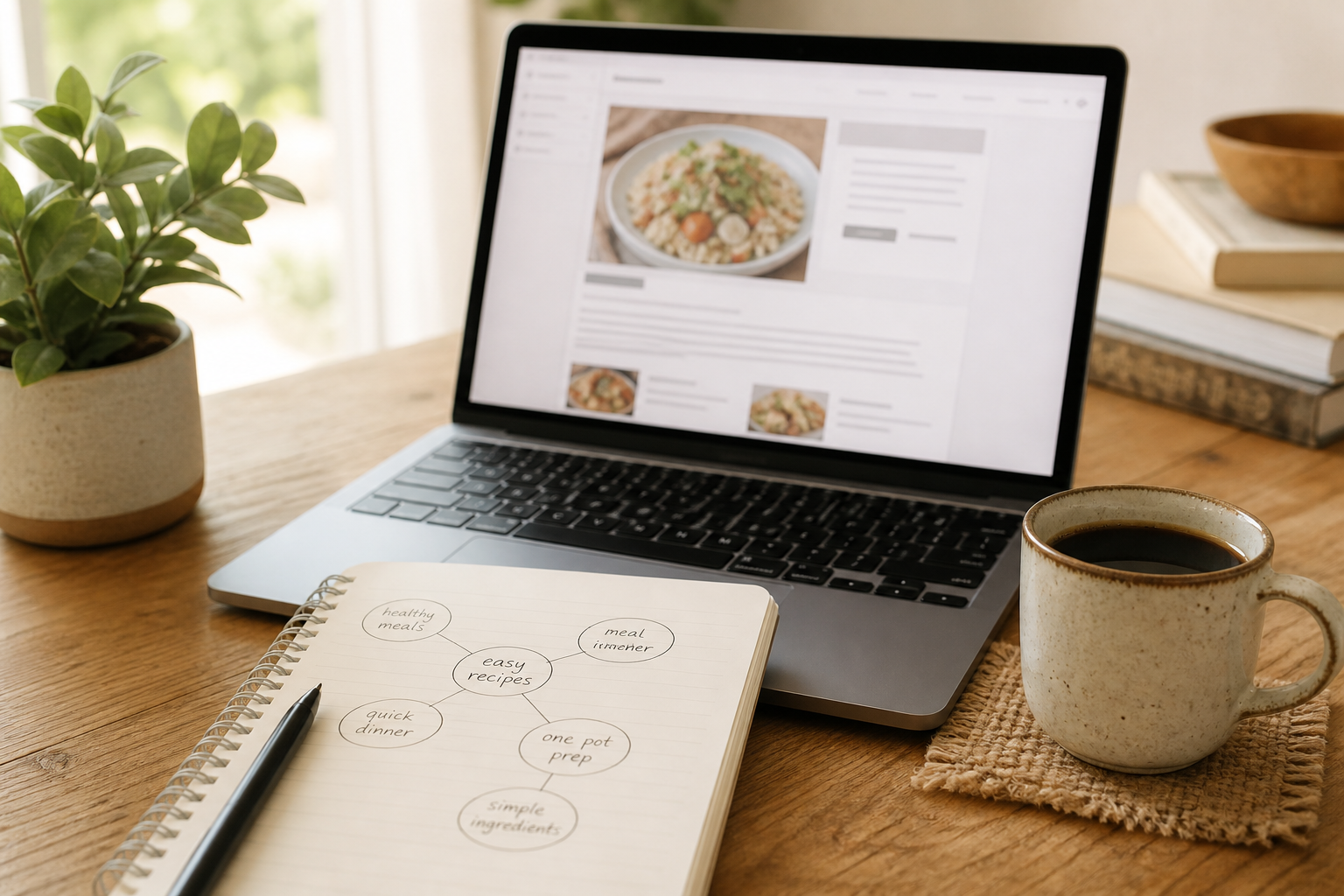
Most food blog SEO advice still sounds like 2012: install a plugin, stuff a keyword in the title, sprinkle internal links everywhere, and hope Google notices. Some of that was never the point. Some of it mattered when recipe sites were bolted onto general-purpose CMSs and every technical detail was the blogger’s job.
Google’s SEO starter guidance is simpler than the industry that grew up around it: make useful, people-first pages; use the words people search for in clear titles and headings; make links crawlable; implement images and structured data correctly. The rest of this article translates that into food-blog terms — and names what you can ignore.
If you do not have recipes live yet, start with how to start a food blog. SEO helps more once there is something worth finding.
What Google actually cares about
In its creating helpful, reliable, people-first content guidance, Google says its systems prioritize pages that demonstrate first-hand experience, clear substance, and value for the reader. On a food blog, that usually looks ordinary: a dish someone can cook, an honest photo, accurate times, and instructions that work.
Thin posts written only to capture a keyword, copied methods, and fake engagement do not age well. One excellent recipe page beats ten near-duplicates chasing the same search.
Google needs to understand that this is a recipe
Google supports Recipe structured data and can use ingredients, instructions, prep and cook time, images, nutrition, and related fields for enhanced search appearances. For recipe rich results, Google currently treats name and image as required — a recipe page without a real dish photo is not merely “less pretty,” it is often ineligible. Markup should describe an actual dish. Instructions work best as explicit HowToStep entries. Images must be crawlable and genuinely represent the dish.
Translation for food bloggers: ingredients, steps, and times are not decorative fields on a pretty card. They are structured information Google can understand — when your platform outputs them correctly. Your editor should already know that a recipe has ordered steps; you should not be pasting schema by hand.
If you are manually installing an SEO plugin just to get recipe schema onto the page, your blogging platform is making you do work the platform should be doing.
Your recipe title should say what the recipe is
Google’s title link guidance recommends descriptive, concise titles and warns against vague titles and keyword stuffing. “My Grandma’s Sunday Dinner” is a bad SEO title. “Slow-Braised Beef Pot Roast” tells both Google and a human what they are getting.
Use the words cooks type — “easy chicken taco recipe,” “brown butter chocolate chip cookies” — in an order that still sounds human. Clever nicknames can live in the intro. The H1 should be cookable and findable. More on writing the page itself in how to write a recipe for a food blog.
Internal links actually matter
Google uses crawlable links to discover pages and understand how they relate. Descriptive anchor text and cross-links between relevant pages on your own site help.
So instead of “add lots of internal links for SEO,” do this: if your chicken Parmesan uses your tomato sauce, link “tomato sauce” to that recipe. You just helped the reader and told Google how those pages relate. Link when it helps the cook — not to hit a quota.
Images are part of the recipe, not decoration
Google’s Recipe documentation expects recipe images to represent the dish and to be crawlable and indexable. A generic stock photo of flour and eggs as the primary image for lasagna fails both the reader and the markup rules. For best results, Google also recommends multiple high-resolution images covering 1:1, 4:3, and 16:9 aspect ratios — not because cooks need three crops on the plate, but because different search surfaces use different shapes. One oddly cropped vertical phone shot is fine for your feed; it is a weak bet if you expect every Google surface to reuse it.
Follow ordinary image SEO practices: a clear finished-dish photo, descriptive file names, and alt text that says what is on the plate. Daylight and honesty beat a prop closet. Practical shooting tips live in how to take food photos for your blog; layout that keeps the photo near the cookable parts is covered in best recipe page layout.
What Google asks for — and who does the work
Here is the food-blog translation of the Recipe documentation, without turning search optimisation into evening homework:
| Google asks for | What that means for a food blogger | Savorible |
|---|---|---|
name + image | Required for recipe rich-result eligibility — ship a real finished-dish photo | Title from the editor; image when you set the recipe photo |
| Recipe structured data | Ingredients and instructions need machine-readable markup | Automatic from the recipe editor |
| Crawlable recipe images | Do not hide the finished dish behind inaccessible image URLs | Emitted in markup when you set a recipe photo |
| Multiple image aspect ratios | Prefer high-res photos; Google recommends 1:1, 4:3, and 16:9 for rich results | You upload the dish photo; we keep improving how we serve crops |
| Clear title | Call it “Beef Burgundy,” not “Sunday Night Special” | You write it |
HowToStep instructions | Keep real cooking steps separated and ordered | Editor enforces structured steps |
| Browsable recipe collection | Maintain an index readers and crawlers can move through; Google also documents ItemList markup for recipe collections | Automatic index on your blog homepage |
What food bloggers can safely ignore
- Keyword density rituals and exact-match title stuffing
- Buying links, fake reviews, or invented star-rating schema
- Hiding the recipe under a thousand-word memoir “for SEO”
- Plugin shopping as a substitute for publishing useful pages
- Weekly algorithm panic — publish, improve recipes, earn trust
Technical basics still matter: HTTPS, mobile-readable pages, reasonable image weight, a sitemap, and no accidental noindex on public recipes. You should not need a weekend of add-on archaeology for those.
What Savorible handles automatically
Savorible treats recipe structure as a product feature, not a project: ingredient groups, steps, timings, and notes on the page; hosting and SSL included; pages that already know what a recipe is. You cook and write. Savorible emits the markup and site basics Google needs to understand a recipe collection.
For why so much food-blog advice still sounds like a software assembly manual, read why most food blog advice is outdated.
Start your food blog
Start your very own food blog in 10 minutes.