People ask about cost before they ask about recipes — fair enough. The honest answer is that you can start a food blog for very little, or you can spend hundreds before you have published a single meal. The difference is usually how much software you buy before dinner is online — not your cooking talent.
A lot of “starter budgets” quietly assume a self-hosted WordPress kit: hosting, a premium theme, a recipe plugin, and a few “must-have” add-ons. That path is real. It is not the only path — and it is where beginners usually overpay.
What you actually pay for
Roughly speaking, costs fall into four buckets:
- Writing and publishing — your time, recipes, and photos
- Your web address — a Savorible address is included
- Hosting and software — where the site lives and how recipe pages are built
- Extras — themes, plugins, email tools, stock photos, courses
You need the first three in some form. Most of the fourth can wait until you are publishing regularly. See what you need to start a food blog for the non-money version of this list.
Self-hosted WordPress costs
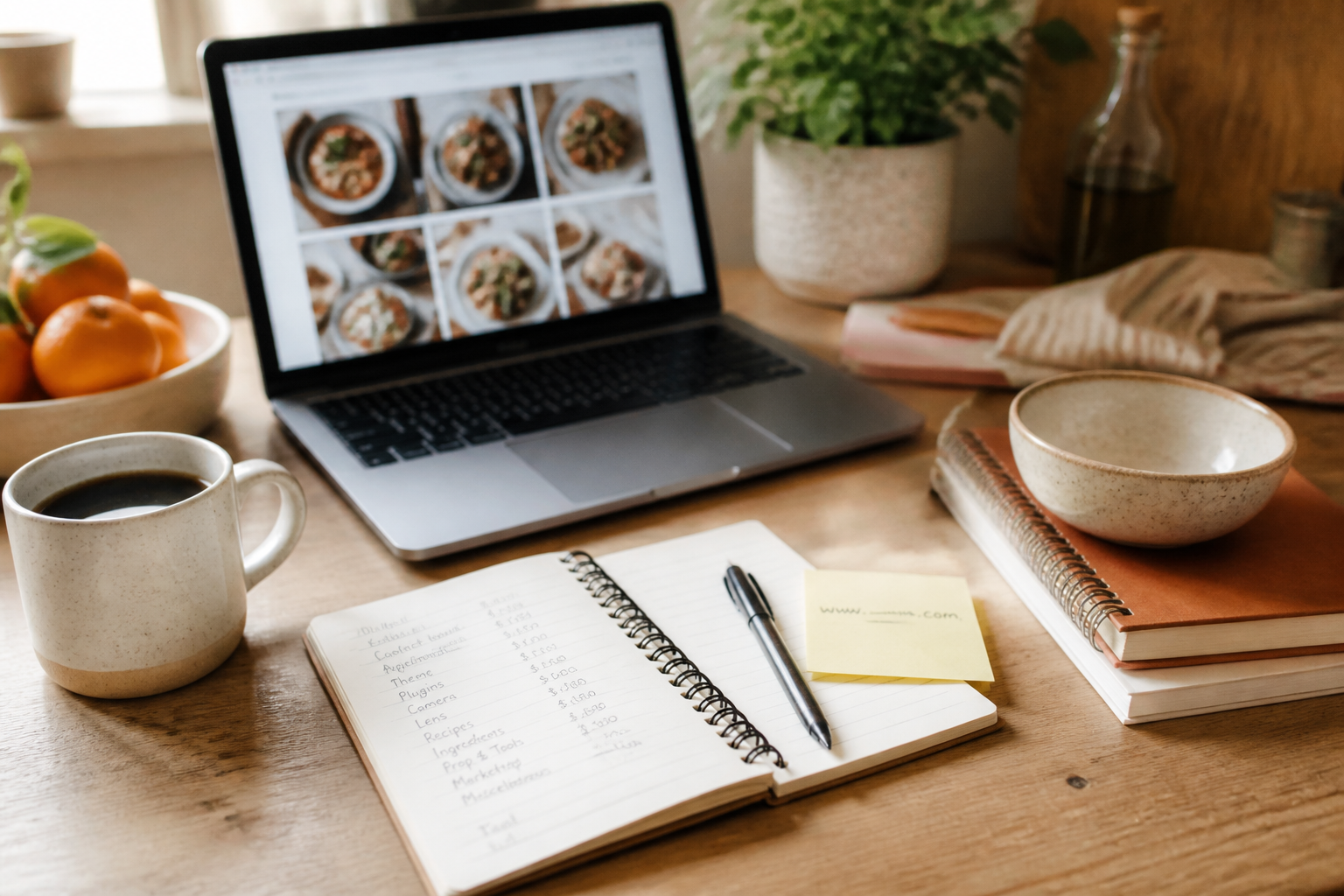
A common self-hosted WordPress setup looks like this in the first year:
- Domain name: about $10–20 / year
- Hosting: often $60–180 / year once intro deals end
- Premium theme: $0–80 (one-time or yearly)
- Recipe plugin: $0–100+ / year for the good ones
- Backup, SEO, caching, security plugins: $0–150 / year if you go premium
- Email newsletter tool: free tier, then paid as you grow
You can keep WordPress cheap with free themes and plugins. You can also end up with a stack that costs more than the blog earns for a long time. Maintenance — updates, conflicts, broken SSL, plugin churn — is the hidden cost. Whether you need that stack at all is a separate decision: do you really need WordPress for a food blog?
What a hosted food blog costs
Hosted platforms package hosting, SSL, and recipe-ready pages together. You usually pay a subscription instead of buying each piece separately. That can be cheaper in the first months because you are not buying a theme, a recipe plugin, and three add-ons before your first post.
Savorible is built for this path: name your blog, choose a look, and publish recipes without a separate hosting bill, theme shop, and plugin invoice on day one. Start free while you set up, then grow when the blog is real.
Where beginners overspend
- Buying a premium theme before writing three recipes
- Paying for courses instead of publishing
- Custom design work for a blog with no audience yet
- Multiple overlapping plugins that do the same job
- Buying a domain for every name idea you brainstormed at midnight
- Camera gear when a phone in daylight would ship the post
Spend first on getting a readable recipe online. Everything else is decoration until someone cooks from your page. Buying tools before food is why so much beginner guidance feels stuck; see why most food blog advice is outdated.
A sensible starter budget
If you want a number: many people can get a simple food blog live for $0–30 in the first month (domain optional), or closer to $100–250 in year one on a classic WordPress stack once hosting intros expire. Your time is the real investment.
For the non-money decisions, read how to start a food blog.
Start your food blog
Start your very own food blog in 10 minutes.