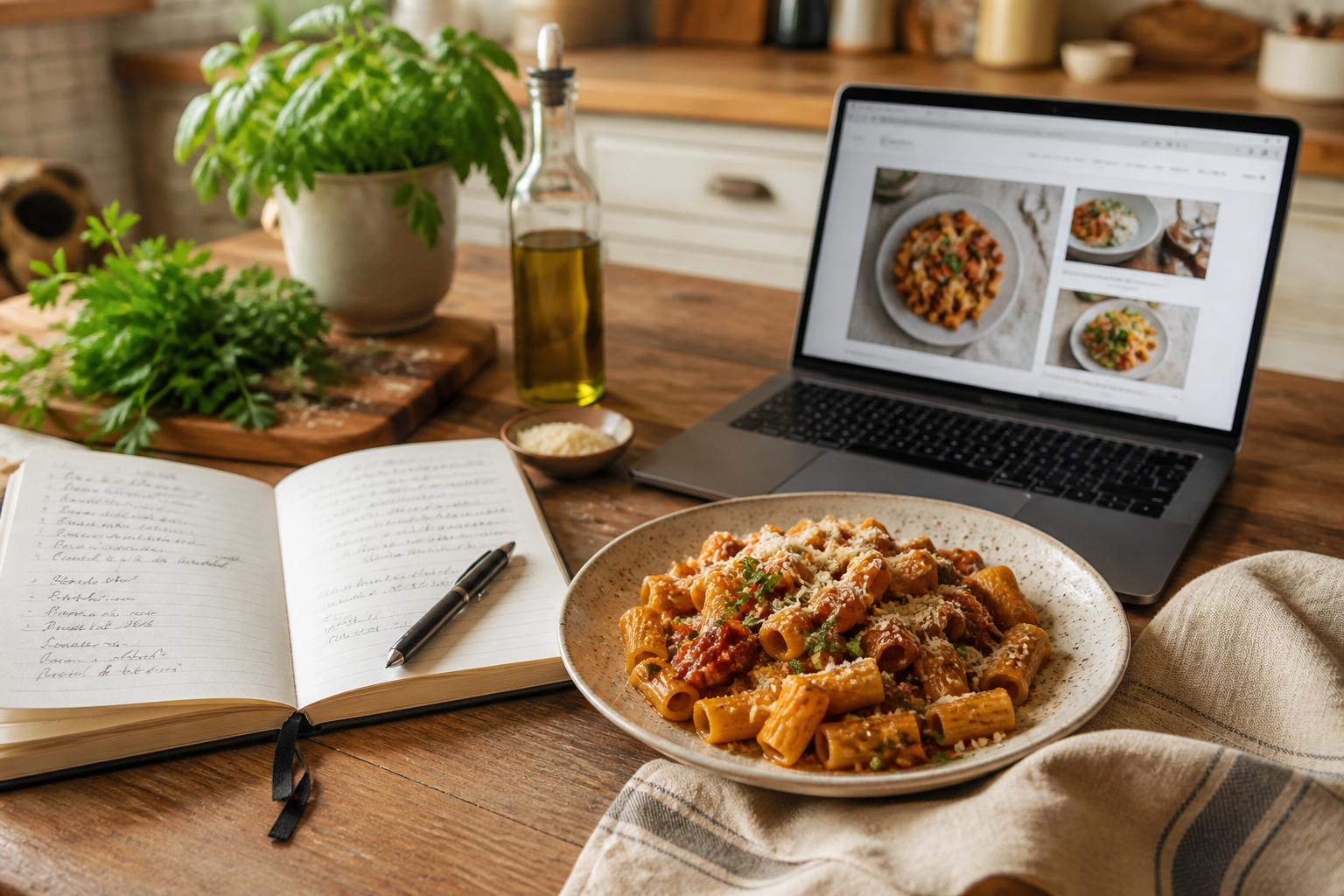
A beginner decides to share her chicken soup recipe. Forty minutes later she is comparing caching plugins, debating backup plans, and still has not typed a single ingredient.
That checklist exists because historically the software made those decisions the blogger’s problem. Tutorials documented the assembly line, then the assembly line became the definition of “starting a food blog” — even for people who only wanted to publish dinner. We are going to separate what still helps from what is mostly inertia.
Why that advice stuck around
WordPress is a general-purpose CMS. It does not know what a recipe is until you teach it — usually with a theme, a recipe plugin, and a pile of supporting plugins for search, speed, and security. Tutorials correctly documented that assembly line. Then the assembly line became the definition of “starting a food blog,” even for people who only wanted to publish dinner.
The advice was not wrong for its era. It became outdated when better defaults existed — and many guides never updated the premise.
What still matters
- A clear focus and recipes people can actually cook
- Searchable titles and honest photos
- Pages that work on a phone
- Consistency — publishing beats perfecting the stack
- Real SEO basics — covered in food blog SEO: what actually matters
None of that requires you to enjoy plugin management. It requires you to cook, write, and ship.
What you can stop treating as mandatory
- Assembling hosting, theme, and recipe plugin before your first post
- Buying premium tools to look “serious” before anyone cooks from your site
- SEO folklore that never came from Google’s own guidance
- Courses that teach the stack instead of teaching you to publish
- Gear lists that confuse photography hobbies with food blogging
For the short day-one list, see what you need to start a food blog. For dollars, see how much it costs. For the platform decision without the dunk, see do you really need WordPress.
What this means for the software you choose
If a platform makes you install a plugin to get recipe structure, schema-friendly fields, or a print-friendly page, it is outsourcing product decisions to you. Sometimes you want that control. Often you want dinner online.
Savorible exists because recipe publishing should not require a second hobby in website maintenance. Hosting, SSL, and cookable recipe pages come as the default — not a checklist of extras. That is the product thesis behind this editorial voice: skeptical of unnecessary complexity, not dismissive of WordPress when it is the right tool.
How to read food blog advice from now on
Ask three questions of any guide:
- Does this improve the recipe or only the software stack?
- Is this still true because platforms changed — or only because the article is old?
- Would I still need this step if the host already understood recipes?
If the answer to the last one is no, you found outdated advice wearing a beginner-friendly smile. Then go publish something cookable — start with how to start a food blog.
Start your food blog
Start your very own food blog in 10 minutes.