
A recipe tag is a label shared by recipes that belong together — Weeknight dinners, Soups, Chicken. Tags do two jobs: they keep your own collection organized, and they decide which related recipes a reader is offered at the bottom of a recipe.
What tags do for readers
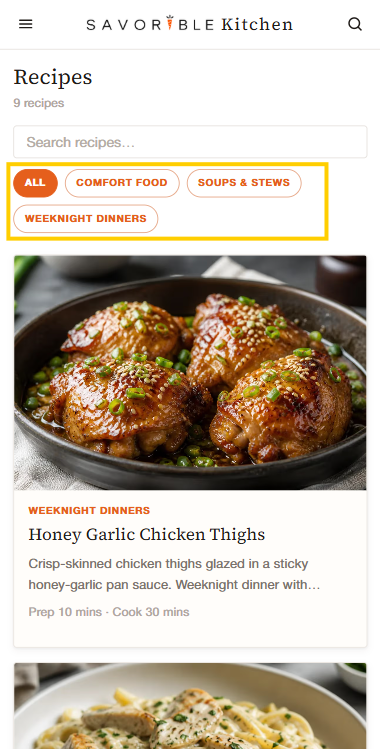
On the Recipes page, each tag appears as a pill under the search field, so a reader can filter the list without using the header search. An All pill sits first, and the row is hidden until you have at least one tag.
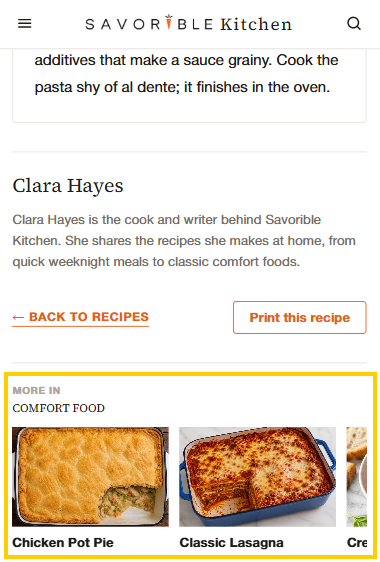
The same tags also drive related recipes at the bottom of a published page, under a heading like More in Comfort Food.
How related recipes work · Edit a tag across several recipes
Add tags to a recipe
- Open the recipe in the editor.
- Press Add tags above the recipe.
- Type in Search or create a tag. Tags you already use appear as you type — pick one to reuse it.
- If the name is new, press Create tag (or press Enter). Names need at least two characters.
- Press Save tags.
Tags are not written to your blog until you save or publish the recipe, so Cancel in the tag window really does undo everything.
Remove a tag
Each tag on the recipe shows as a chip above the title. Press the ✕ on a chip to take that tag off this recipe. It stays on your other recipes.
Naming tags well
- Name them the way a reader would ask: Weeknight dinners, not wk-dinner. Tag names are shown to readers as “More in …”.
- Capitalisation does not create a second tag. Soups and soups are the same tag.
- A tag with two recipes in it is doing nothing yet. Three or four is where a reader starts to feel a collection.
Limits and tidying up
A recipe can carry 10 tags, and a tag name can be 60 characters. When the last recipe using a tag drops it, the tag is removed for you — there is no list of empty tags to clean out.